Thursday, May 28, 2026

Ilona

Iona’s home is a compact, two-story frame house, painted a cheery, soft shade of yellow.

It is surrounded by mature trees and shrubbery and there is a short overgrown walk leading

to the door. The house has a cottage-like feel. An old, bent woman with silver hair pulled

back into a bun, wearing a sensible house dress and shoes, hesitantly opens her door.

She keeps the glass screen door closed. Understandable. 

I begin my pitch at a louder than normal volume because not only am I speaking to a much older woman, but I’m also speaking through a pane of security glass.

Iona sizes me up and pushes her screen door open. I start over. I pace my words more slowly this time, as I can’t discern if she looks confused because she can’t hear me, or because she doesn’t understand me. A minute into my pitch, a small white dog escapes through the open door into the small yard. The woman seems unphased. “Maxie!” She calls for the dog. Her tone is calm and I notice her words are laced with an Eastern Europen accent of some sort.

Maxie is a good dog and returns to the porch while I get to the million dollar question: “Do you have five minutes to take a quick survey with me on my computer?”

“Come inside,” she says. 

This has never happened in the weeks I’ve been doing this job. If a person agrees to the survey, I’ have always had to continue outside on the porch, balancing my tablet on a stair or a box or some other object.  I thank her sincerely for the invite and follow her inside.  

She sits on the sofa, and motions me to the spot next to her. “Come. Sit.” she commands. I obey.


I begin the survey confirming her address, age and gender. 

The question I must ask verbatim for gender is: “Are you a male or female?” This causes her to fall silent.

I’ve learned in previous efforts with this somewhat awkward question to just remain quiet and wait for the response, rather than try to explain or justify the question.

After whole seconds of silence, “I am a woman!” she says defiantly “Always have been.”  I nod, smile  and continue with the questions. 

In between questions she draws my attention to Maxie and how much he is enjoying his bone. We talk briefly about Maxie. He’s eight years old. Small dogs live longer, she says. He’s a Poodle mix. Poodles are smart dogs. 

I agree. 


Don’t have to teach him anything. He already knows.

She also had another dog and cat before, but both got old and died

I return to the survey and ask her a long question about tobacco and nicotine use. She emphatically says she never smoked. Never ever. 

But her father smoked. Smoked constantly, she says. Died at 45 years old from smoking. He had five children, and none of them smoked, Ilona explains, because of how they saw their father die.

She grew up in Hungary. Came to the United states in 1985.

I ask if she owns or rents the house we are in. It’s one of the survey questions.

Bought the current house in 1993. It wasn’t new. But newer.

Husband died a few years ago. It is just her in the house now. 

I ask  her if she is currently in the armed forces. 

I have to ask these questions, even when the answer is obvious.

No, she tells me. But her son was in the Navy.

Once I enter this basic information, the survey proceeds:

Rate quality of overall health (Excellent-Good-Fair-Poor)

Rate quality of overall life (Excellent-Good-Fair-Poor)

Rate quality of social interactions (Excellent-Good-Fair-Poor)

Of the approximate thirty people I’ve persuaded to do this survey to date, all have responded in the Excellent/Good categories for all three questions. 

I ask Ilona:

Rate the quality of overall health. Excellent? Good? Fair? Poor?

Fair, she says

Rate the quality of your overall life.  Excellent? Good? Fair? Poor?

She thinks for a moment. Fair, she eventually says.  

Rate the quality of your social interactions. Excellent? Good? Fair? Poor?

Silence.

I rephrase:

“How is your social life? Friends, family, neighbors?”

(In retrospect, I probably shouldn’t have rephrased so much.)


“Oh…..” she finally says, her voice trailing off. 


“Not good,” she says in a half whisper. 


“Poor” she clarifies. 


“Very poor.” 


That was the end of the survey.

I press a button for the database to do some calculating. She is not selected to participate in the full study. Unlike those before her who also were not selected, rather than feeling any sense if relief, Ilona is saddened by this outcome.  

I say good bye, rub Maxie behind his ears one last time and return to my car. I realize that I am a little bit sad, too.

Monday, March 3, 2025

Muslim Toilets

Remember my review of the Dutch shelf toilet last summer? Now I bring you my thoughts and impressions of the Muslim toilet. 

Every toilet used in our recent travels in both Indonesia and Malaysia were of this design. Often both a squatty-potty and a western style version were offered. What makes them Muslim, is the adjacent hose. Do not confuse this hose with a bidet. 

In many parts of SE Asia, there is an absence of toilet paper in the bathroom stalls. If there is TP, there is nearly always a nearby covered trashcan where the used TP is to be discretely folded and placed. In my research, I found no mention of any sort of municipal treatment facilities in Indonesia or Malaysia. Wastewater goes to individual septic systems, if it is plumbed to anything at all. My research. also found that what is flushed often travels thru a series of irrigation ditches and is used in the surrounding rice fields.   

We Westerners still use the toilet paper, and hopefully remember to toss it in the can and not the bowl. 

Non-Westerners, however, reach for the hose and spray rather than wipe. These hoses sometimes deliver the water with such force, that if you weren't awake before, you certainly are after! Wiping is not necessary. Which is the Muslim way. In fact, our Western practice of wrapping such flimsy paper in our fingers and coming in close contact with our bum and residual poo, is regarded as both inefficient and disgusting.  

And, after having my bum blasted sparkling clean for a few weeks now, I tend to agree. i.e., "You want me to use this flimsy tissue paper and do WHAT with it?" 


P.S. Lest you forget, I spent the last 23 years of my career working in a large wastewater treatment facility. My brain is forever warped by this experience, with a need to know what happens to our poo after we flush.  This may be an off-color topic for some, but there are legions of us sanitary sewer folks (former and current) who find this sort of info fascinating. I write these words for them.

Monday, September 9, 2024

The Day Before My Surgery

After ten plus years of scheduling, then unscheduling to try a new  intervention, then rescheduling, then unscheduling to try something else, I'm finally going down the rabbit hole.  Tomorrow I am having  the cornea of my left eye removed and a dead person's cornea sewn in its place. A cornea transplant surgery. Not as intense as a kidney transplant or other organ transplants as there is no blood in the eye. The chance of rejection is greatly reduced. However, the recovery time and conditions under which are significantly onerous.  I am a little nervous and thought I'd capture my "before" thoughts and ruminations here. 

How did I get here? Back in 1984 I had elective surgery on my eyes. A precursor to lasik. I had what was called radial keratotomy. Dr. Hines here in Denver performed the procedure. For the first ten or so years after, it was a success. I saw great out of both eyes. 20:20.  Contacts were never an option for me and I was too vain to wear my glasses full time. I always thought my blue eyes were my best feature and I was loathe to want to cover them up with a pair of glasses. My vanity is responsible for where I am now.  

Dr. Hines was all over the TV back then. He advertised himself as the, "Eye doctor of the Denver Broncos".  I mean, wouldn't trust him, right?  And, as predicted, after ten years or so I started to need reading glasses. Then, not as predicted, my left eye began failing me. One doctor said my cornea in that eye looked like bubble wrap. I was back in glasses. My right eye was still doing ok, but the lens in my left eyeglass kept getting thicker and thicker. Can you say "coke bottle"?  I tried what was called Sclera contacts specifically engineered for my one eye. But like the contact lenses of my youth, I was never able to wear them comfortably for more than a couple of hours. The prescription max'd out about three years ago.  Two years ago my cataracts finally grew to be large enough to qualify for surgical removal. I went to my now familiar surgeon for this procedure and he tried his best to modify the new lens to correct some of my cornea issues.  But no luck. 

I basically see only light and shadow out of my left eye. But here's what is amazing about eyesight: your brain will try to make up the deficit for what your eyes can't see. I don't know what I don't see. I think I am seeing something. I think I see everything. It isn't until I get closer, or the light gets brighter or I tilt my head a certain way, that I am able to truly see what it is I'm looking at.  Depth perception is my greatest struggle. Going down stairs is treacherous. Hiking downhill is frustrating. I gave up mountain bike riding several years ago as I could no longer see how far logs in the  trail were, or how far a drop off a rock might be.  Yet I continued driving. Much to the dismay of those who were away of my lack of visual acuity.  I learned if I followed a pair of tail lights at night I could navigate. I learned to always look for the right lane marking as I frequently mis-saw lane markings on my left side. Once, I screeched to a halt thinking I was about to go over a really big bump in the road. A second later I realized it was a shadow and not a bump. So many stories like this. 

After going thru many evaluations to confirm everything behind my cornea is functioning properly, I was approved for this transplant.  It is about a two hour long procedure. I won't be staying overnight. Rather AL will bring me home and stay with me thru my first follow up visit the next day. I have a second follow up visit a week later. Then, assuming all is progressing as it should, I will start returning to my surgeon every two weeks for the next four months to get a stitch here, and a stitch there removed. At four months, I quit going every two weeks, and stay with what ever number of stitches remain until a year post surgery. Then these last stitches are removed. It is only then will we know for sure if the surgery was a success. Sometimes, when the last stitch or two is removed, the cornea will turn into amorphous jelly and I'm back where I started.

So, that's where I've been, and where I'm going. 

I am not as stressed as I thought I'd be. I am definitely distracted and THIS is all I can think about. My social life will be severely restricted in the beginning as I will be at high risk for infection. I also will not be able to lift anything heavy or do any activity that will raise my heart rate, for fear of popping a stitch. I don't know for sure if these restrictions are for the first four months only, or for the whole year. 

It's a crazy commitment, but I feel as though I have no choice. While getting all the preliminary evaluations done, they found the very beginnings of macular degeneration in my right eye. My good eye. It could be decades before I'll be impacted by it, but they don't do this transplant surgery after age 70. As I'll be 68 in February, I think this might be my only chance to preserve what eyesight I have. 

My life will be different afterward. Both short term and long term. If successful, no more double vision or lack of depth perception. If not successful, I guess I'll continue learning all the various ways to adapt. We humans are such adaptable creatures. Thank goodness.

Here's looking at you! (heh-heh-heh)

Saturday, August 24, 2024

Shelf Toilets

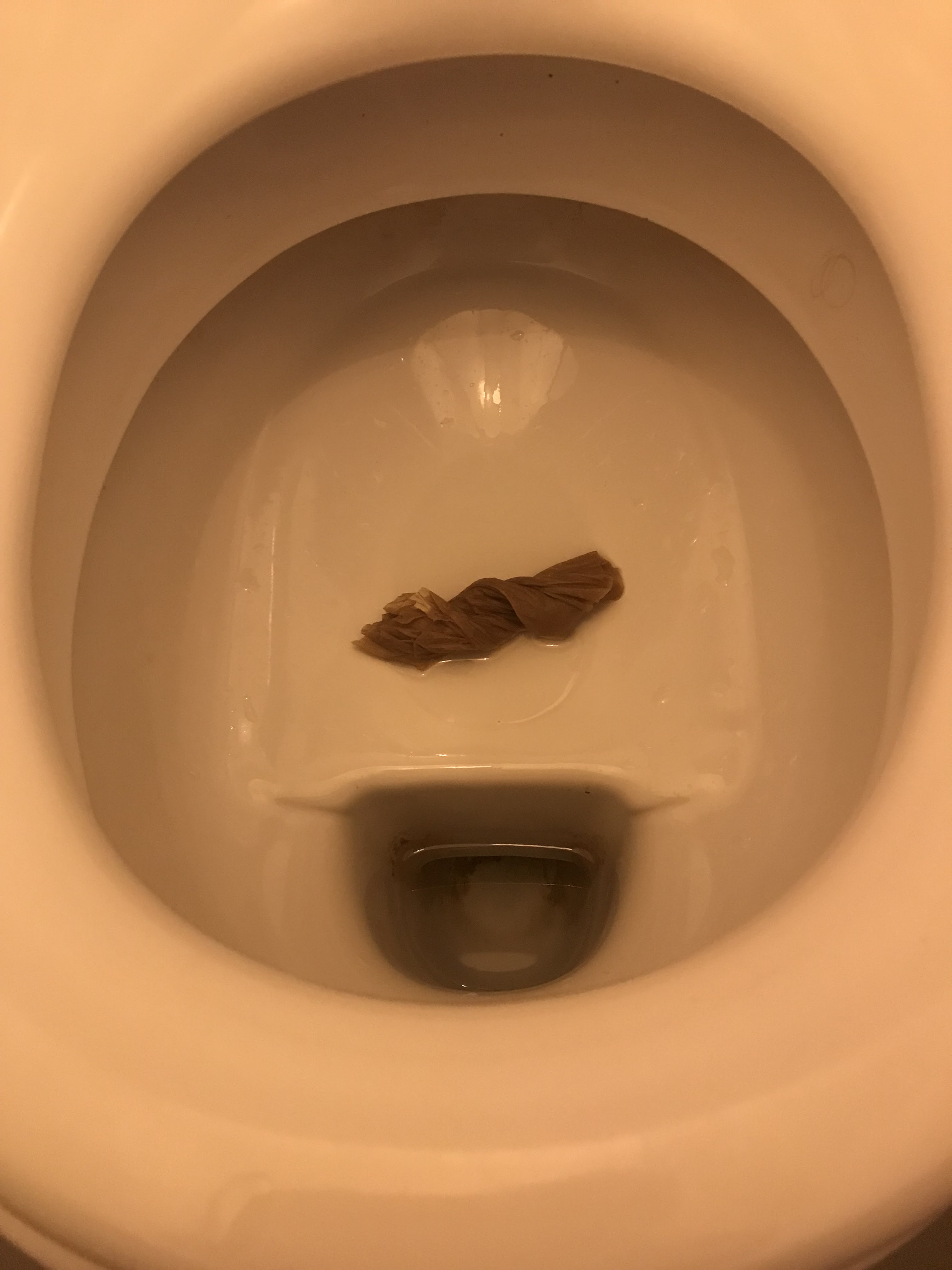
 Disclaimer: An actual turd was NOT used in the making of the accompanying photo.

During my fourteen days here in The Netherlands, I've experienced some new things, but nothing prepared me for the decidedly Dutch attraction to shelf toilets.

Historically, the inspection shelf toilet design was widely adopted in the Netherlands due to the challenges of disposing waste in a country with a high water table. The shelf design helped facilitate inspection and cleaning of the waste, which was important in areas where drainage systems were limited. 

Having worked a brief lifetime in the water treatment industry, I was amazed to learn that it wasn't until as recently as 2017 that all of Amsterdam was linked to a sanitary sewer system. Prior, all sewage went directly into its canals. Even as modern sewage infrastructure has expanded, many Dutch still prefer the inspection shelf style. There is a perception that these toilets are more hygienic and easier to keep clean compared to standard bowl designs. The shelf design is also seen by some as more water-efficient.

Despite my research into the reasoning behind such a toilet, and my now fourteen days' worth of experience using one, I am not swayed. I look forward to hearing the familiar, "plunk-plunk-ker-PLUNK" sound of my turds hitting the water.


Wednesday, January 17, 2024

Today

 A friend of mine who 

Wade is not completely sure of yet

Approached.

And as he did, Wade

retreated

Retreated back to my side. 

Pressing into my leg.

Holding my pants.

And in that moment, everything

that ever happened to me

disappeared

And all that remained 

was knowing I am 

This sweet soul's Safe Place


Wednesday, January 10, 2024

Top Hats

Al typically wears cargo pants or shorts. Says the pockets are his purse. One for his reading glasses. Another for his driving glasses. A pocket for his cell and another for his wallet. Since his back surgery, he has changed from wearing cargo pants to wearing coveralls. As he has to wear a back brace wherever he goes right now, adding that to a pair of cargo pants and belt was just too much. 

Coveralls were the perfect solution. All of the pockets that cargo pants provide, with no need for a belt.

Then Ayla tells me that Abraham Lincoln favored top hats as he could carry stuff in it, under his hat. She said Al didn't need cargo pants or coveralls. 

What he needed was a top hat.


 "I'm in serious trouble if Duluth Trading Company ever comes up with cargo top hats," I said.


A few hours later, Ayla says she entered this idea into ChatGPT. This was Chat's response:


Introducing the Duluth Cargo Top Hat – where rugged style meets functionality! Crafted with durable materials, this hat seamlessly combines the classic top hat elegance with the practicality of cargo pockets. Perfect for those who demand both sophistication and utility, it features multiple pockets for stashing essentials on the go. From outdoor adventures to urban exploration, conquer every terrain with the perfect blend of fashion and function.


 I worry I may have created a market where there previously was none.

Monday, October 30, 2023

Nancy: The Fixer

For reasons I don't know, thoughts of my oldest sister, Nancy, have flooded my mind these past several days. Nancy was thirteen years older than me.  Nancy was pregnant with my first niece, Terri, only weeks after Mom delivered my younger sister, Lydia.  Despite the near constant upheaval and turmoil that dominated Nancy's life, she was always regarded as, "The Fixer," by the immediate family in times of crises.

I considered this role of Nancy's. Why oh why did we seek her counsel during those darkest of times? I may never learn the answer to that question. Regardless, in times of crises, Nancy ALWAYS rose to the occasion. 

She knew what to do. She directed. She delegated. She networked. She always said yes.  How many nights did I spend as a teen at her place when Mom and Dad were their most violent?  Who did Lydia go to when she needed to leave a marriage? Who did Susan send Ray to when he needed a new home? Who did Bill call when he lost his job? Who did Mom lean on when Grandma died?

Yet, Nancy was, by far, the most troubled of us all. The one with  the most heartache and hardship. Drama filled Nancy's life.  

Nancy was a prodigy. A genius. She was morbidly obese and a chain smoker. 

She read Heidi out loud to me when I was in elementary school. She took me to see Rosemary's Baby at the drive-in when I was 13. She let me sleep on her couch so many times in my life. 

All of us knew: You can always stay with Nancy.

So, yeah. I've been thinking a lot about Nancy in recent days. Not sure why. Probably an old age thing.  

If any of you reading this have some similar Reflections of Nancy, please share!

Nancy, w Terri on her lap. Mom (l) Grandma (r)